
Knots & Skyscrapers: The Living Heritage of Hong Kong’s Master Scaffolders
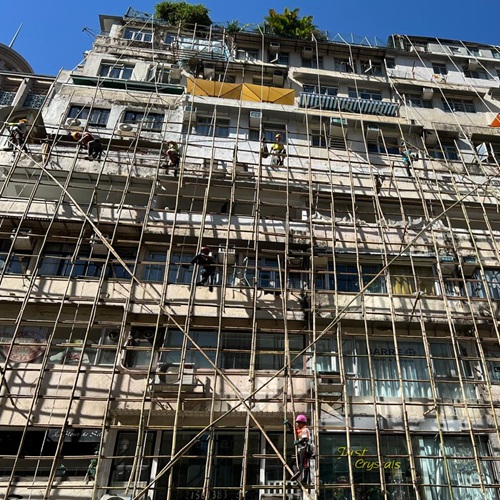
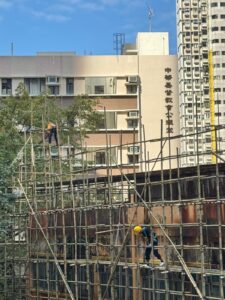
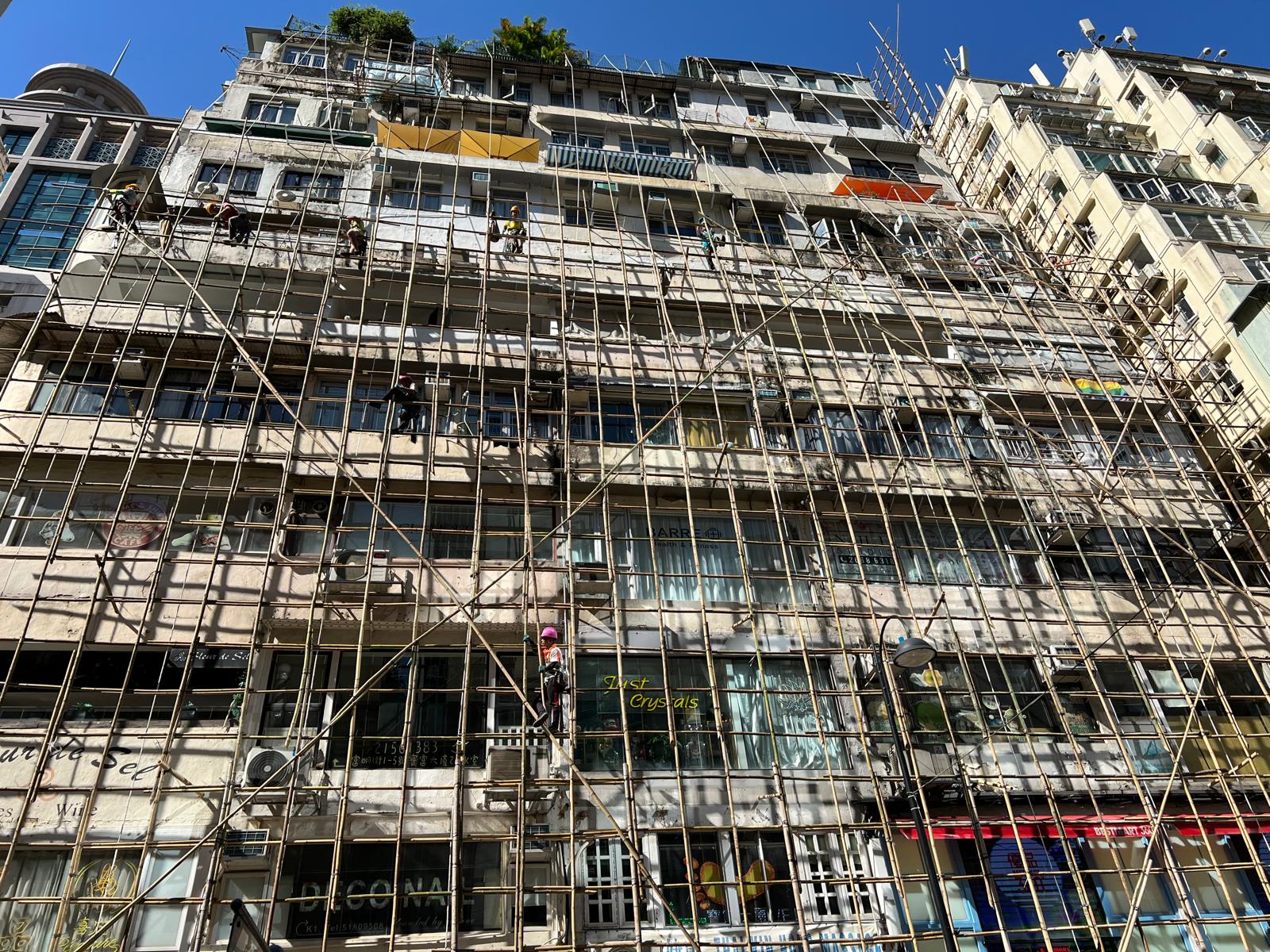
Look up amongst the glass and steel skyscrapers of Hong Kong, and you will inevitably spot a giant, web-like grid enveloping a building. Known locally as 搭棚 (Da Peng), the practice of bamboo scaffolding is one of the city’s most iconic visual traditions—a living testament to ancient engineering adapting to an ultra-modern metropolis.
A Tradition Woven in History
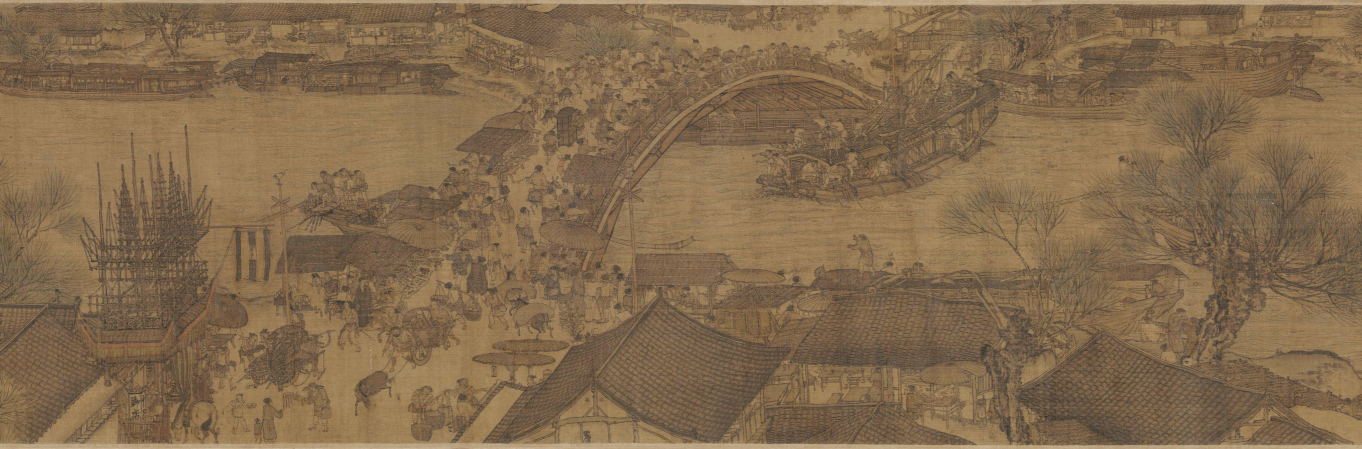
Bamboo scaffolding has been used across China for over a millennium, famously depicted in the 12th-century Song Dynasty painting Along the River During the Qingming Festival.
When British colonial developments transformed Hong Kong in the 19th and 20th centuries, master scaffolders (Sifu) brought these traditional techniques south.
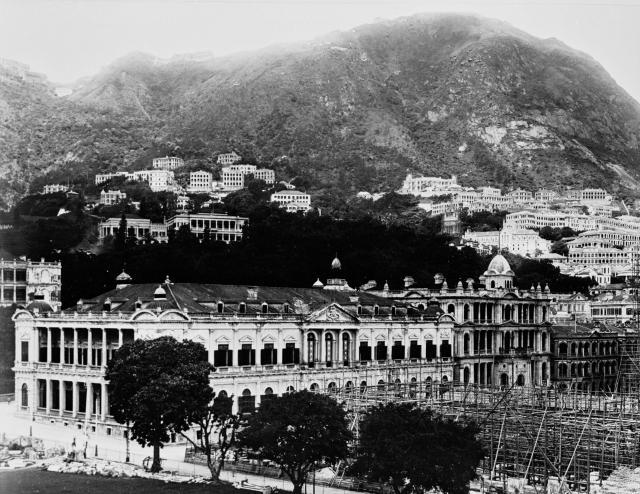
While mainland cities gradually phased out bamboo in favour of metal during the late 20th century, Hong Kong stood out as a notable exception. The city’s unique combination of extreme vertical density, steep terrain, and rapid building cycles allowed this ancient craft to thrive well into the 21st century.
Cultural Significance and Intangible Heritage
In 2017, Hong Kong’s bamboo scaffolding was formally inscribed on the city’s First Intangible Cultural Heritage Inventory. It represents far more than temporary construction equipment:
The Craft Master: Construction relies entirely on spatial judgment, physical intuition, and hand-eye coordination rather than formal written architectural blueprints.
Guild Traditions: Scaffolders traditionally pay homage to Lo Pan, the patron god of Chinese artisans and builders, maintaining long-standing trade customs.
Pop-Up Opera Theatres: Beyond high-rise building maintenance, bamboo scaffolders erect temporary Shed Theatres (Mat Tsiu) for Cantonese opera performances during festive religious events, such as the Hungry Ghost Festival.
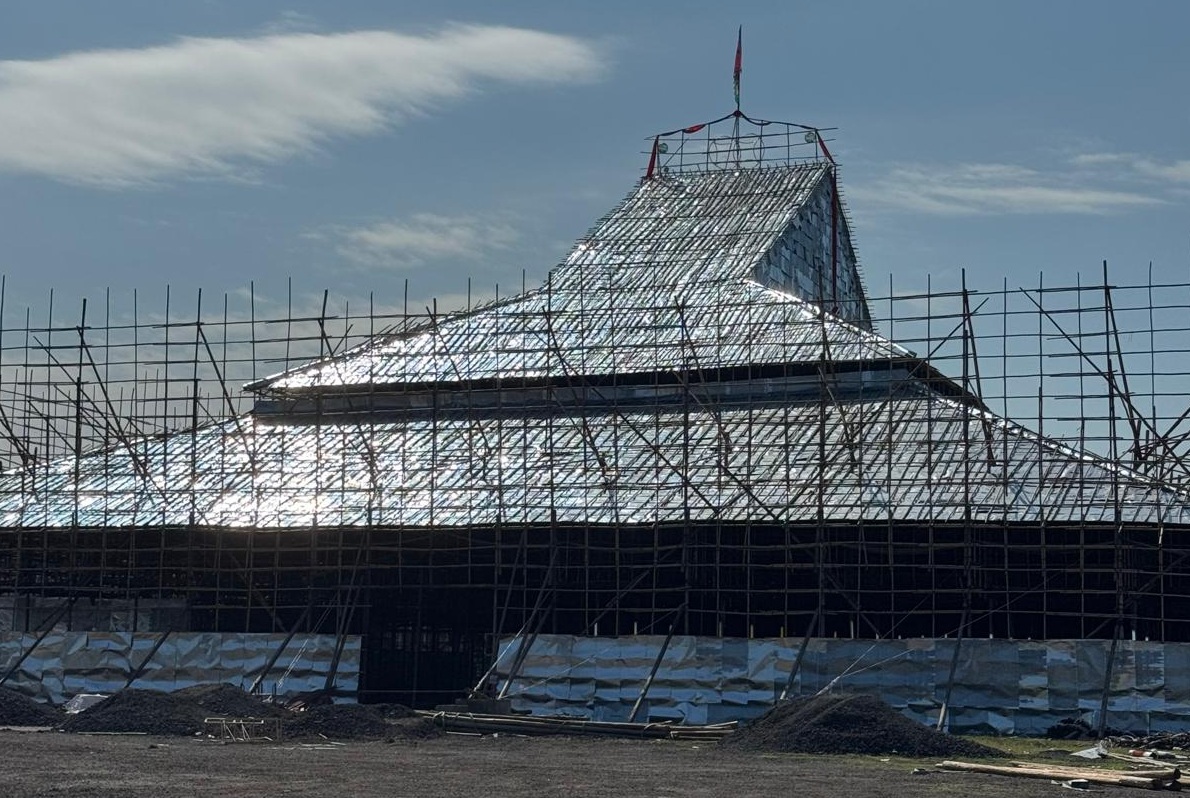
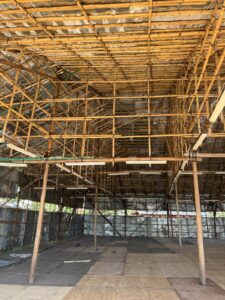
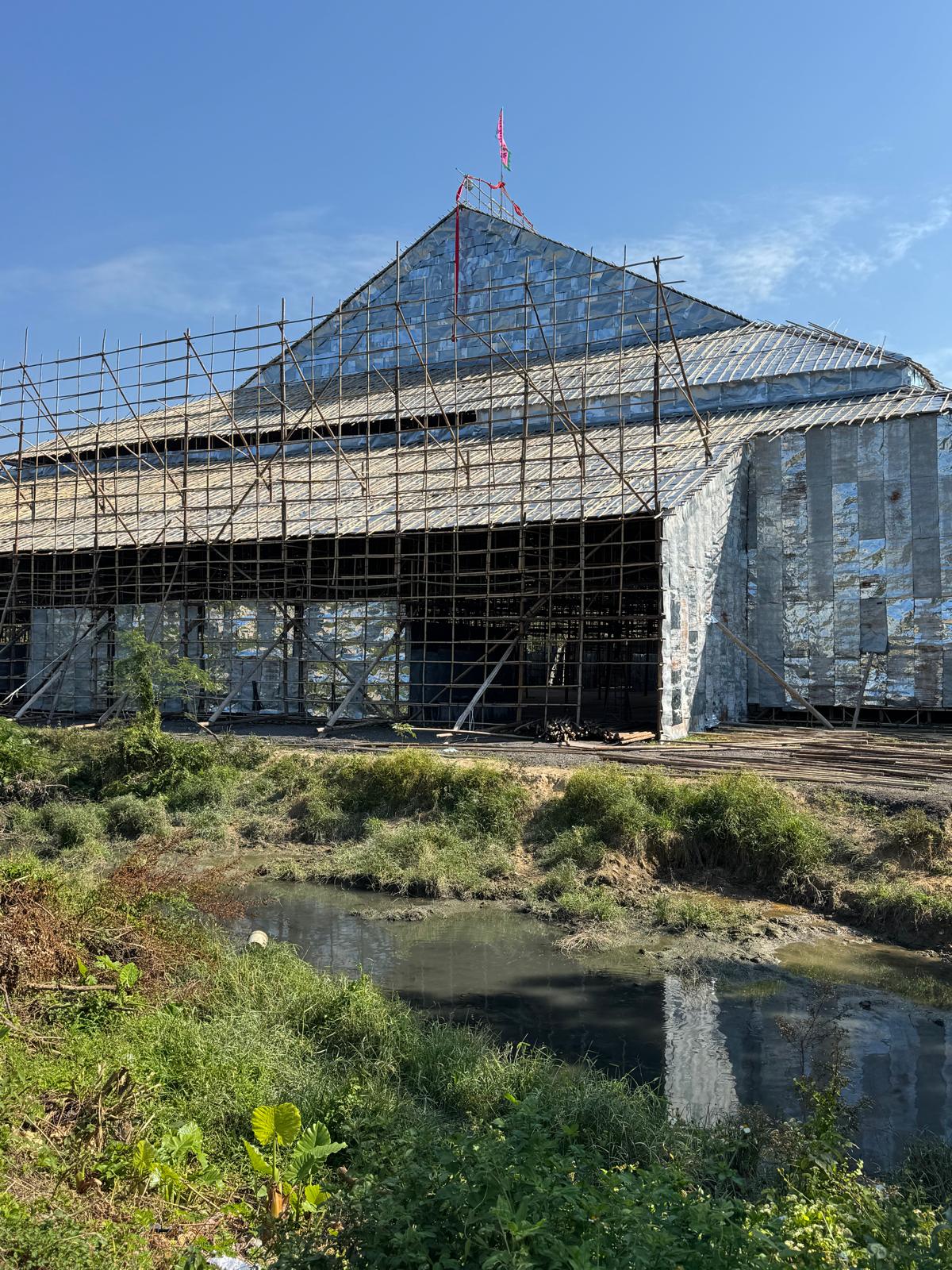
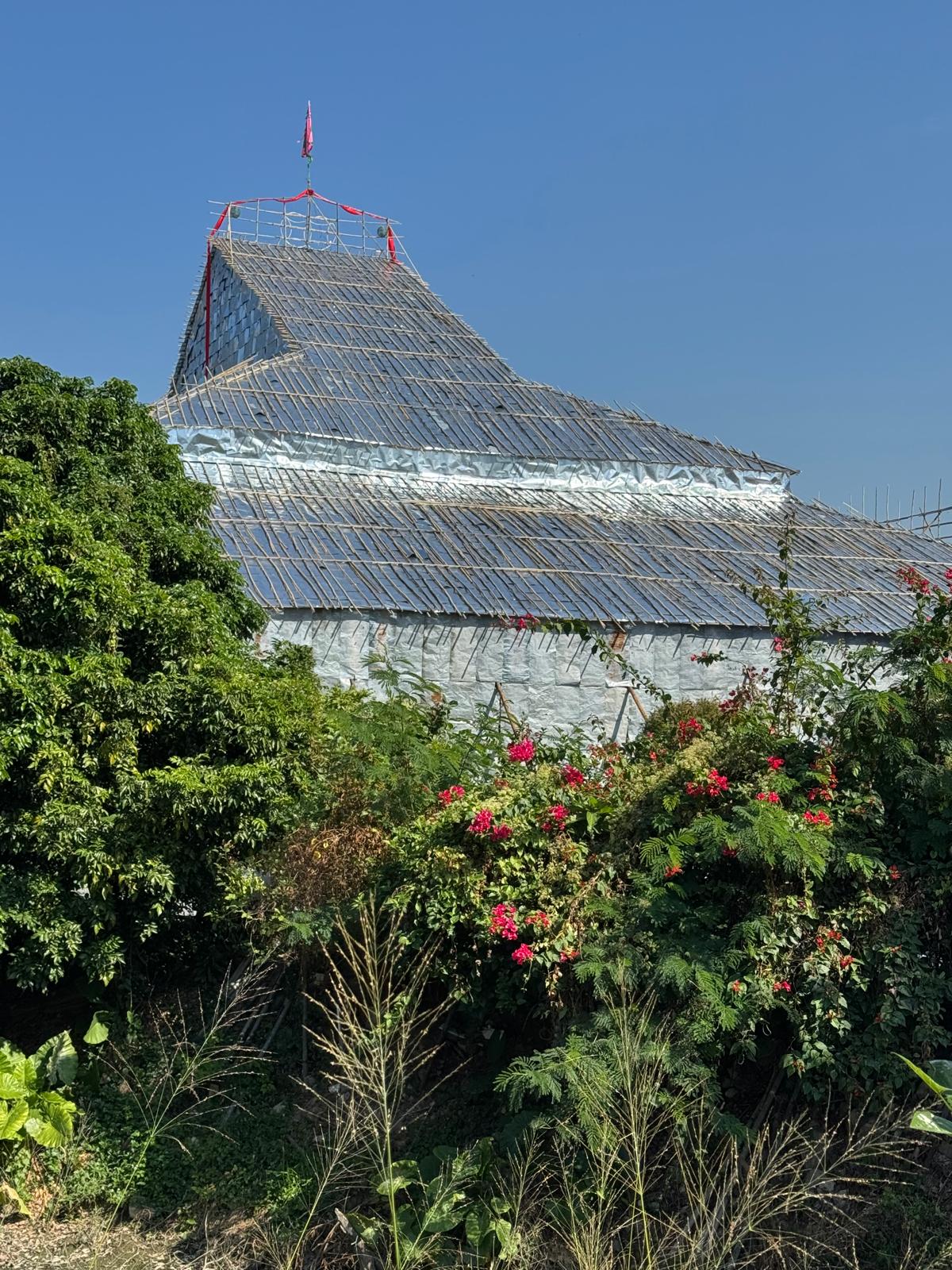
Here is the giant temporary bamboo altar built in 2025 for the Kam Tin Jiao Festival. It has been officially recognized by Guinness World Records as the world’s largest temporary bamboo altar.
Key Advantages: Why Bamboo Endures
Despite the prevalence of modern building materials, bamboo remains a fixture of Hong Kong’s skyline due to several distinct practical advantages:
Unmatched Flexibility and Adaptability: Bamboo can be cut quickly on-site using simple hand saws. This allows scaffolders to tailor structures around tight alleyways, awkward cantilevers, and irregular building facades where rigid metal frames simply cannot fit.
Remarkable Speed and Efficiency: Experienced scaffolding crews can erect and dismantle structures in a fraction of the time required for metal framing, all without relying on heavy machinery or cranes to transport components through congested streetscapes.
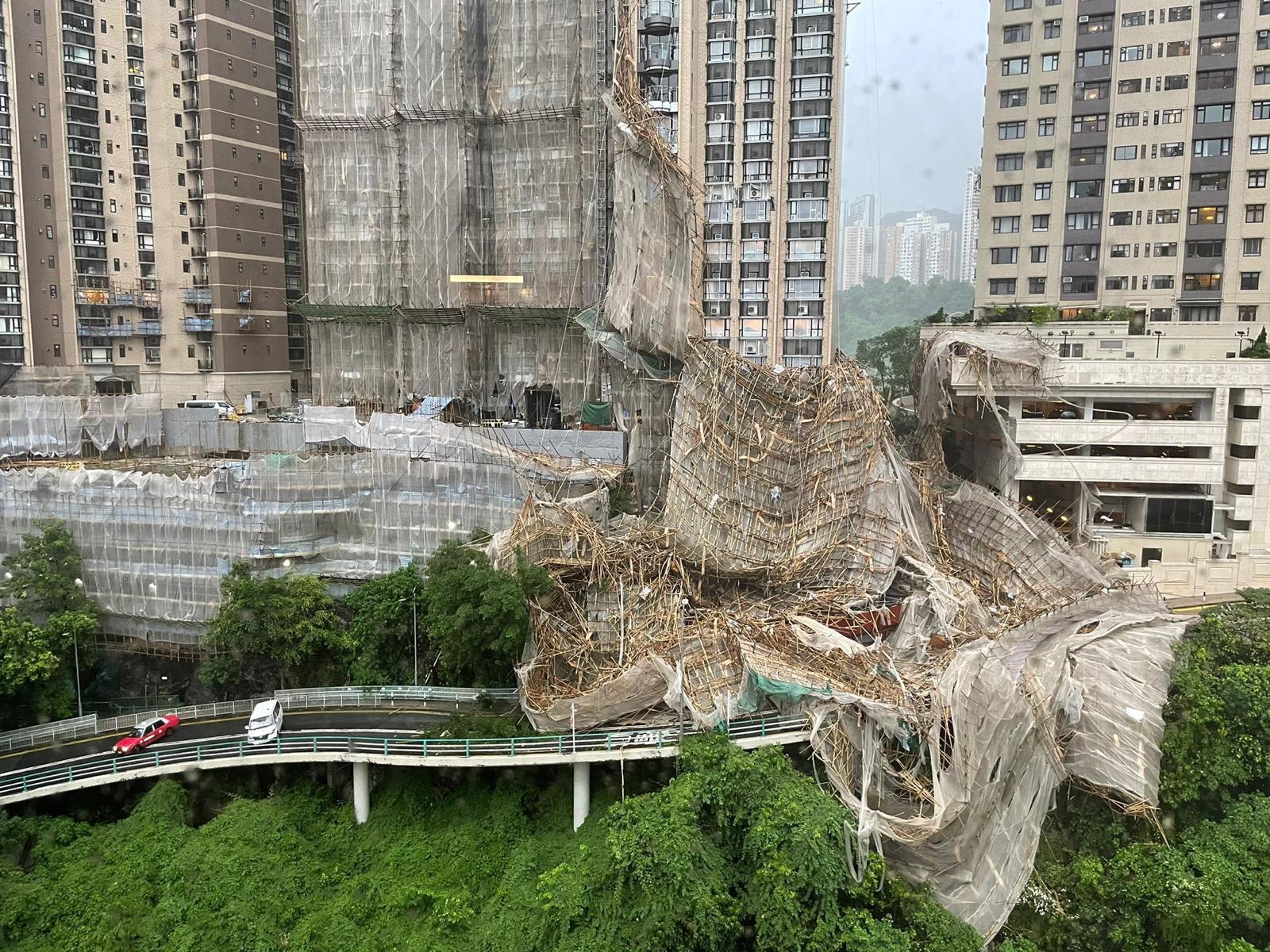
Natural Typhoon Resilience: Thanks to the natural elasticity of bamboo stems, the structures can bend and flex under severe tropical winds, absorbing atmospheric energy rather than buckling under pressure like rigid steel poles might. Furthermore, in the rare event of a super typhoon, lightweight bamboo poses significantly less severe risk to life and property on the bustling streets below compared to falling steel beams.
Cost-Effectiveness: Sourced primarily from Southern China (predominantly using the Kao Jue and Mao Jue species), bamboo is significantly cheaper to procure, transport, and store than heavy metal scaffolding.
Drawbacks and Safety Concerns
Despite its versatility, organic scaffolding carries inherent operational challenges:
Fire Considerations and Compliance: Solid, mature bamboo stems possess a relatively high natural ignition temperature and do not catch fire easily on their own. However, the protective mesh netting wrapped around scaffolding structures must strictly comply with mandatory fire-retardant standards to prevent external ignition sources from spreading flames across building facades.
Material Degradation: Exposure to humidity, tropical rainfall, and pest infestations naturally weakens organic fibers over time, limiting the reusable lifespan of each pole.
Worker Shortages: The physically demanding nature of the work and long apprenticeships mean fewer young recruits are entering the trade, creating an aging workforce.
Recent Criticisms and the Path Forward
In recent years, bamboo scaffolding has faced heightened scrutiny from urban planners, safety inspectors, and the public following high-profile incidents involving collapsed structures during extreme typhoons or site fires.
Critics argue that traditional lashing techniques—secured primarily using plastic strips rather than standardized mechanical fasteners—make uniform safety and quality control difficult to monitor across large construction projects. In response, authorities have introduced stricter regulatory guidelines, including mandatory structural engineer certifications for complex sites, compulsory safety harnesses for workers, and the use of fire-retardant protective mesh.
While hybrid models integrating metal brackets with traditional bamboo are becoming increasingly common, this centuries-old craft remains an indispensable symbol of Hong Kong’s architectural ingenuity.