
Shadows of the Tiger: The Wild History of Hong Kong’s Haw Par Mansion
If you grew up anywhere in Asia, or if you’ve ever had a nasty bug bite or a sore muscle, you know the distinct, menthol-sharp scent of Tiger Balm.

But what you might not know is that this tiny, hexagonal jar of ointment built one of the most eccentric, surreal architectural marvels Hong Kong has ever seen: Haw Par Mansion.
Before it became a symbol of historic preservation, this Tai Hang estate was a physical manifestation of immense wealth, family duty, and Chinese folklore.
Let’s step back in time to discover how an herbal ointment built a palace.
The Family: From Burmese Herb Shops to Global Empires
The story begins not in Hong Kong, but in Rangoon (now Yangon), Burma. In the late 19th century, a Chinese herbalist named Aw Chu Kin ran a modest medicine shop called Eng Aun Tong (the Hall of Everlasting Peace).
When he passed away in 1908, he left the shop to his two sons, whose names would perfectly predict their future legacy:
- Aw Boon Haw (meaning “Gentle Tiger”)
- Aw Boon Par (meaning “Gentle Leopard”)
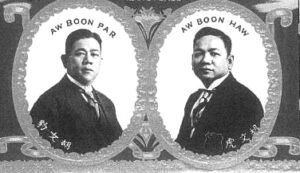
Boon Haw was the marketing genius—gregarious, bold, and fiercely ambitious. Boon Par was the quiet mastermind, a talented chemist who perfected their father’s basic formula. Together, they took a traditional remedy for aches and pains and re-engineered it into a global phenomenon: Tiger Balm.
By the 1920s and 30s, the brothers were multi-millionaires, expanding their empire into Singapore, Malaysia, and Hong Kong.
The Project: Building a Mansion (and a Fantasyland)
In 1935, Aw Boon Haw decided to cement the family’s status in Hong Kong. He bought a massive plot of hillside land in Tai Hang for the staggering sum of $16,000 HKD (a fortune at the time) and spent millions more constructing Haw Par Mansion.
The project was unique for its time, divided into two distinct parts: a public wonderland, and a deeply private sanctuary.
1. The Tiger Balm Garden: A Surreal Public Gift
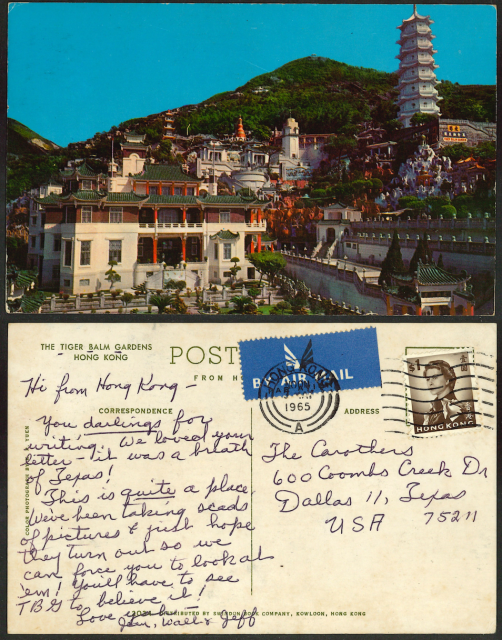
Aw Boon Haw was a firm believer in giving back, but he did it with a twist. He opened the estate’s sprawling grounds to the public as the Tiger Balm Garden. It was Hong Kong’s very first theme park—long before Disneyland.
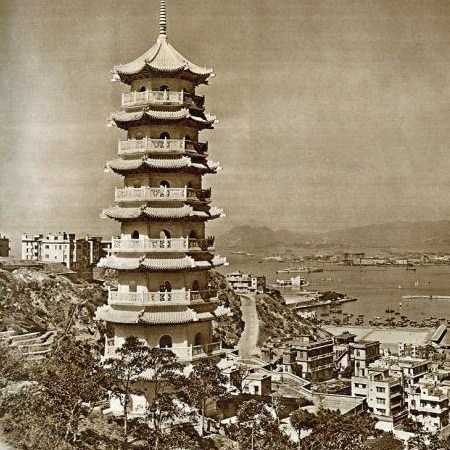
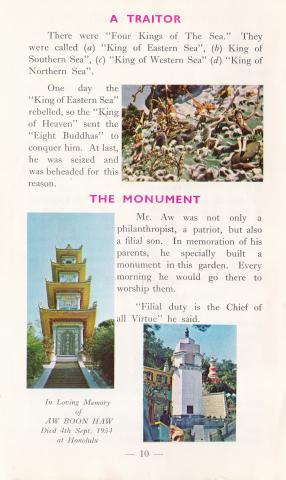
The garden was a wild, kaleidoscopic wonderland of painted concrete statues illustrating Chinese mythology and Buddhist concepts. Its most famous attraction was the “Ten Courts of Hell,” a graphic relief wall depicting surreal punishments for sinners. For generations of Hong Kong kids, a weekend trip to Tiger Balm Garden was both an exciting day out and a terrifying lesson in morality. At the center of it all stood a striking, 7-story white pagoda.
2. The Mansion: The Secret, Private Home
While the public crowded into the gardens, the mansion itself was strictly a private family sanctuary. Everyday citizens could only look up from the park and wonder what kind of ultra-luxury lay behind the closed doors of the “Tiger Balm King.”
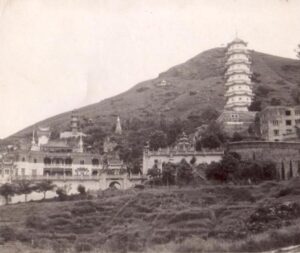
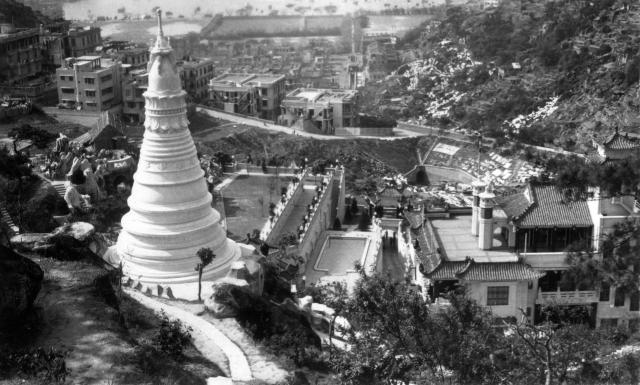
Aw Boon Haw actually built this magnificent residence out of love for his second wife, Tan Kyi Kyi, who had fallen in love with Hong Kong’s cosmopolitan lifestyle and its cooler, breezy climate compared to the sweltering heat of Singapore and Burma.
On the outside, the house featured traditional green glazed roof tiles and flying eaves. Inside, it was tailored for the family’s high-society life, boasting a lavish mix of Italian stained-glass windows, Art Deco geometries, and literal gold-leaf ceilings.
A Tale of Two Brothers: While Aw Boon Haw lived in the Hong Kong mansion with Tan Kyi Kyi and his children (including his daughter Sally Aw, who would grow up to be a legendary Hong Kong media tycoon), his brother Boon Par stayed down south to manage their Singapore operations. To ensure fairness, Boon Haw built an equally grand estate for his brother in Singapore, known today as Haw Par Villa.
War, Change, and the End of an Era
The family’s grand lifestyle inside the mansion was heavily disrupted by the arrival of World War II and the Japanese occupation of Hong Kong. Aw Boon Haw was initially arrested by Japanese forces. Though he was eventually released back to the mansion due to illness, parts of the family had to flee back to Burma.
After the war, the family returned and the house reclaimed its status as a bustling family hub, remaining so until Aw Boon Haw passed away in 1954.
Following his death and changing family fortunes over the decades, the glory days of the estate began to fade. By the late 1990s, the land was sold for redevelopment. While the iconic public gardens were sadly demolished in 2004 to make way for residential towers, intense public outcry managed to save the main mansion building and its private garden from the bulldozers.
What happened to this private palace after it narrowly escaped the wrecking ball? Stay tuned for our next post, where we look at Haw Par Mansion today—its transformations, its recent closures, and its highly anticipated futur.